
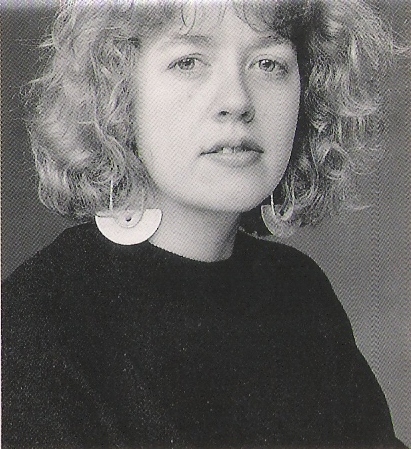
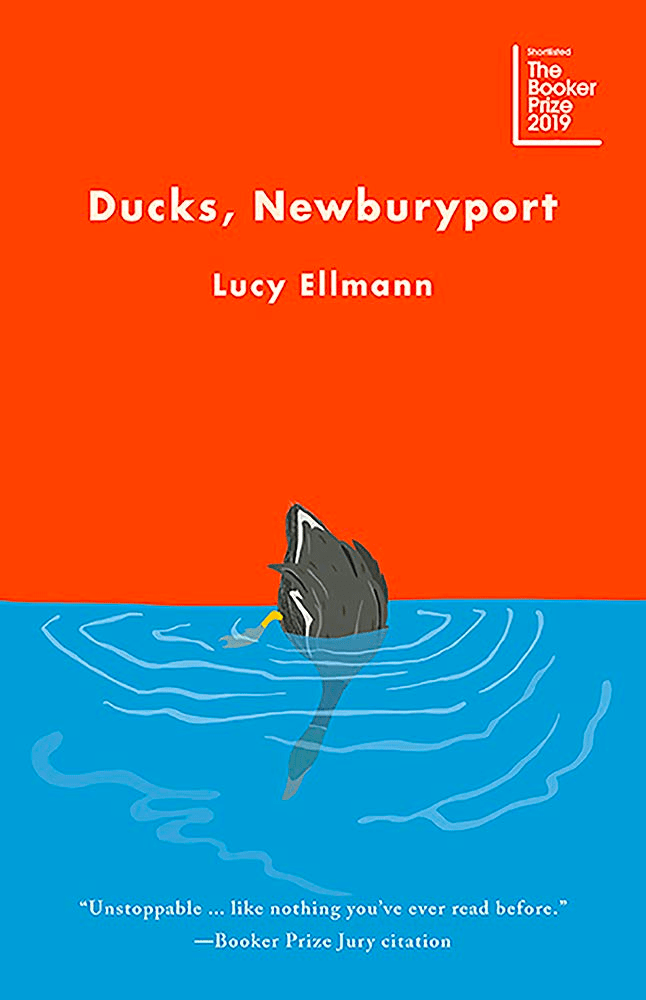
Lucy Ellmann’s one-thousand-page novel Ducks, Newburyport is a long swim inside a woman’s mind, unbroken by any full stops. Thoughts are separated by the phrase ‘the fact that,’ and associations roam freely across the page. There is a normally structured sub-story of a mountain lioness with paragraphs and periods. These womanly, motherly points of view begin to intertwine as you move through the frenetic world of our unnamed narrator, who is a baker-from-home from Ohio, with four children and a damaged past family history. Captured within this novel is culture, a simulacrum of America set in 2017.
before my leap into the thousand page sentence, i blanketed myself in articles about Lucy Ellmann’s Ducks, Newburyport. The concept revolved in my head, bemusing and opalescent. I was a child who fastidiously made lists of fruits, animals, strange names of colors that I found on the internet, and spells off of questionable witchcraft sites. Now, I find more within the idea of a list, within the idea of putting words against each other. There are some sentences that writers create that utilize the collision of words that would otherwise not be seen together. It produces a colorful moment of semantic nuance and a curious grin.
My fascination with what one may find to be non sequiturs was enhanced with this book. I believe that Ellmann shows the beauty of seemingly unrelated thoughts that actually lead from one to another, illuminating the weird juxtapositions we make in our minds. “Hawaii, jigsaw,” is one of my favorite moments of two disparate ideas that glow when against one another. It evokes the same bewilderment as poetry; the jigsaw shape of Hawaii, the want to finish a puzzle, to travel to a place to rest, the rest of completing a jigsaw puzzle, the rest of a beach.
“red velvet, old umbrella, gold necklace, golden light,”
“contemplating olive oils, fiddling while Rome burns,”
“toothbrushes, tangerines, and chocolate ladybugs,”
“all sun-drenched and grown up,”
“the fact that there’s no end to how little we know about the moon”
“black still water, pool of motor oil, strange river creature,”
“the undulating landscape of those apricot flanks and lemon-yellow ridges,”
Her mind of one who bakes for a living suffuses her descriptions of the Grand Canyon with fruits. She lives so within the unnamed narrator that even the small observations shine with her idiosyncrasies. Sometimes, thoughts of cinnamon rolls rising will crash into moments of grief for her long-passed mother. It is a juxtaposition intrinsic in us, to drift emotionally, even perhaps in a polar way, while performing our usual duties.
She unleashes her feminism in its sharp, unabashed way at the Booker Prize shortlist interview by “Essentially, I think it’s time for men to shut up, completely.” She responds to the question of why people comment upon the length, and usually do not when it is about a man’s thoughts. She continues: “It’s quite ridiculous to tell a woman to shut up, and I’m not listening, as you can see.”
“the distracting blasts of men’s voices,”
One finds the word perambulation often in articles that describe the nature of the novel. The thoughts are wandering, natural in their associations and endlessness. The marvel comes from her precision at capturing the formless, frenetic mind. Capturing the act of being lost in thought, or simply drawing the shape of a perturbed or bored mind seems impossible, but Ellmann writes a woman’s inner world in all its intricacies.
‘The fact that’ as the indication of a new thought and phrase can be further parsed as a question of a person claiming that something is a fact. Of course, Ellmann stretches the idea of a fact, because many “facts” are suppositions or even questions that end in another comma instead of a question mark. What I claimed to be a fact, a mispronunciation of Copenhagen, was in fact wrong. And so, the nature of facts put forth by any normal person is flimsy, but especially in the time of the novel, 2017, fake news became commonplace. Falsehoods claimed as veracious were vividly imprinted on the minds of millions of Americans. The recurring device she uses is also a motif of America at the time of reinforcing an untruth until it is fact to someone. Ellmann and myself abhor Trump, and it was chilling to reenter that time period in 2022. How terrible and desensitized we became to his administration. However, Ellmann describes 2017 with sharp emotion, taking in the disasters as they come. Rampant gun violence, absurd and violence-provoking tweets, and Melania’s sky-blue suit.
While reading Ducks, I felt the need to update those around me on my progress. So enamored by the premise, I gave an impassioned synopsis to many. I’d hand them the probably two-pound book and tell them to open to any page and read a little. Its dizzying cadence of unending thoughts frazzled everyone. After page 80, I was well-adjusted and in love. The idea of triumphing a large, experimental book kept my friends entertained. It also fed my ego a bit because they were amused by my mental fortitude for the form and absurdly fast pace of reading. The novel consumed me in the most magical way that literature can.
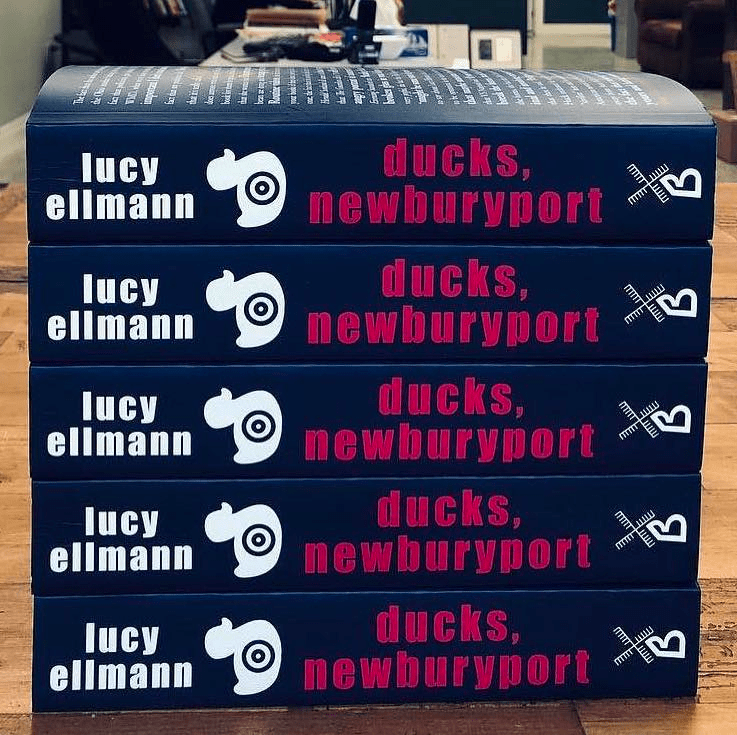
Swimming inside another person’s mind is a nosy person’s dream. Lucy Ellman unlocks that primal curiosity, and for one thousand pages, you can get out of your head and into someone else’s.
“Wordplay, snippets of music, and loopy associations multiply. Every so often, the story of a female mountain lion breaks in, told in crystal-clear, pared-down prose.”
My father recently bought a copy for a flight to and from California, and by page 80, he settled in. I find that my proclivity for the odd derives from him, as he is an eccentric, buoyant 57-year-old. I sent him drafts of my essay for class, and he pointed out the Ducks-esque cadence that I had taken on; with my obsession of writing the shape of being lost in thought, this novel unlocked a new way of description. My father has begun to love the book as I did, its effervescent world showing itself to him.
As my first one-thousand-page book, Ducks, Newburyport sits atop the shelf of my favorite books of all time. Perhaps long books rest there for they take up a longer period of time to read, and you grow more attached with each week spent with it.
 Pussy and Paperbacks
Leave a comment